
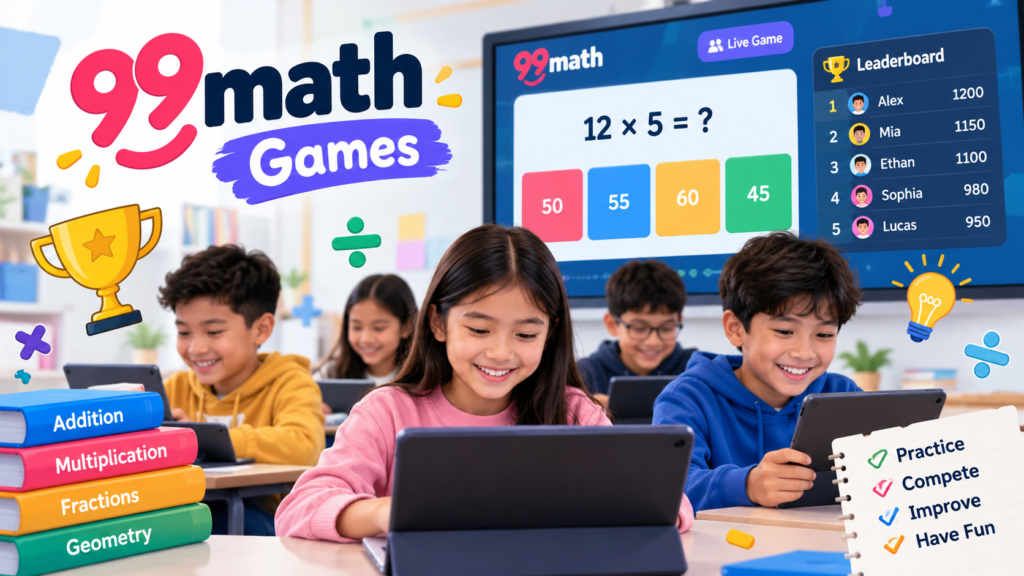
Learning math doesn’t have to mean sitting quietly with a worksheet and solving the same problems over and over. Sometimes, all it takes is a little competition to make a difficult subject feel more interesting. That’s where 99math games come in.
99math is an online math practice platform designed to help students improve their skills through interactive games. Instead of treating every question like another school assignment, students can solve math problems in timed rounds, compete with classmates, and see how they’re progressing. Teachers can also use the platform to make classroom lessons more engaging.
And the best part? Getting started is fairly simple. Whether you’re a student, teacher, or parent looking for a better way to practise basic math, 99math is worth exploring.
What Are 99math Games?
99math games are educational activities built around solving math problems. The platform focuses on helping students practise mathematical skills while making the experience feel more like a game than a traditional lesson.
According to the official 99math website, the platform offers curriculum-aligned activities for kindergarten through grade 8, with additional topics available for older students. Subjects include addition, subtraction, multiplication, division, fractions, decimals, geometry, and more.
Students can participate in live classroom challenges or practise selected skills independently. Teachers can choose topics, organize activities, and review performance reports after a session.
In simple terms, 99math combines math practice with friendly competition. Students still need to understand the questions and calculate the answers, but the game format can make practising those skills more enjoyable.
How Do 99math Games Work?
Getting into a game doesn’t require a complicated setup. Teachers usually create the activity first, and students join using the game code displayed on the teacher’s screen.
Here’s how the basic process works:
- Choose a math topic: The teacher selects a skill, such as multiplication tables, addition, or fractions.
- Set up the game: Game settings can include the duration, number of rounds, and available game modes.
- Share the game code: Students visit the joining page and enter the code provided by their teacher.
- Start solving problems: Once the session begins, students answer questions during the live activity.
- Review the results: Teachers can use the results to see how students performed and identify skills that may need more practice.
The official support guide explains that teachers can use group practice to select skills, configure rounds, and launch a live game. Students join through the displayed code or QR code.
It’s a straightforward system. There’s less time spent getting everyone ready and more time available for actual learning.
Main Features of 99math Games
What makes 99math useful isn’t competition alone. Several features help teachers organize lessons and give students more opportunities to practise.
1. Live Multiplayer Challenges
Live games allow students to participate in the same classroom activity. Everyone works on math problems during the session, creating an energetic learning environment.
Some students enjoy the challenge of improving their scores. Others simply like seeing the class participate together.
2. Different Math Topics
Students don’t have to practise the same type of problem every time. Teachers can select skills according to the class level or the lesson they’re teaching.
Common topics include:
- Addition and subtraction
- Multiplication and division
- Fractions and decimals
- Number patterns and number sense
- Percentages and integers
- Geometry and measurement
- Equations and mixed operations
This variety makes the platform useful for practising familiar concepts as well as reviewing topics that students find difficult.
3. Individual Practice
Not every student learns at the same speed. Some need extra time with multiplication, while others are ready to work on more challenging questions.
99math offers individual practice and assignments, allowing students to work on selected skills at their own pace. Teachers can assign activities and review their progress.
And that’s important. A student who struggles with a particular topic needs opportunities to practise it without feeling rushed through an entire lesson.
4. Progress Reports
Teachers can review information about student accuracy, performance, and areas of difficulty.
These reports help answer practical questions:
- Which math skills are students handling well?
- Where are mistakes happening most often?
- Who might benefit from additional support?
- Has the class improved after repeated practice?
The reports don’t replace a teacher’s judgment, of course. But they can make it easier to decide what to review next.
5. Practice Beyond the Classroom
Math learning doesn’t have to stop when the school day ends. Depending on the activity and account setup, students can complete assigned practice at home.
This gives families another way to support classroom learning. A short practice session can help reinforce a topic that was introduced earlier in the week.
Benefits of Playing 99math Games
Educational games work best when they support real learning rather than distract from it. Used thoughtfully, 99math can offer several advantages.
Improved math fluency: Repeated practice helps students become more familiar with basic calculations and recognize common number patterns.
More engaging lessons: Timed rounds and shared challenges can make routine revision feel less repetitive.
Quick feedback: Students get opportunities to notice mistakes and try again instead of waiting until a worksheet is graded.
Confidence through practice: As learners become more comfortable with a topic, they may feel less nervous about answering questions.
Useful classroom insights: Teachers can use performance reports to identify topics that deserve another explanation.
But there’s one thing worth remembering: speed isn’t everything. A student who takes longer to solve a question may still understand the underlying concept perfectly well. Accuracy, reasoning, and steady improvement matter just as much.
99math Games at a Glance
| Feature | What It Offers |
|---|---|
| Platform type | Online educational math games |
| Main audience | Students, teachers, and parents |
| Grade coverage | Kindergarten through grade 8, with additional topics for older learners |
| Math subjects | Arithmetic, fractions, decimals, geometry, and more |
| Multiplayer mode | Live classroom games |
| Individual learning | Self-paced practice and assignments |
| Teacher tools | Class management and performance reports |
| Device support | Web browsers on compatible computers, tablets, and phones |
| Getting started | Teachers create games; students can join live sessions with a code |
Features and access options may vary by activity and account type. The official website provides the latest platform information.
Tips for Getting the Most Out of 99math
Want to make math practice more useful? A few small changes can help.
- Start with the right difficulty. Choose questions that match the student’s current ability instead of jumping straight into advanced topics.
- Focus on accuracy first. Encourage students to understand each question before worrying about finishing quickly.
- Keep sessions manageable. Short activities can work well as lesson warm-ups or quick revision exercises.
- Review incorrect answers. Discussing mistakes helps students understand what went wrong.
- Celebrate improvement. Recognizing progress can motivate students who aren’t always at the top of the leaderboard.
- Use it alongside regular lessons. Games are a helpful addition to teaching, not a replacement for explanations, discussion, and deeper problem-solving.
Parents can also ask children to explain how they reached an answer. It turns a quick game into a chance to practise mathematical reasoning.
Are 99math Games Free?
The official 99math website states that its core teacher and school features, including live games, assignments, class management, and reports, are free. Some other activities or subscription options may have different access arrangements.
Students joining a live classroom game generally use the code supplied by their teacher. Individual practice may require a student account, depending on the activity.
For the most accurate information about current access, visit the official website rather than relying on an unfamiliar third-party page.
Frequently Asked Questions
1. Can students play 99math games at home?
Yes. Students can practise selected skills and complete assigned activities at home, depending on their account and the available features.
2. Do students need a game code?
For a live classroom game, students typically enter the code provided by their teacher. Individual practice follows a different process and may require logging in.
3. What subjects can students practise?
The platform includes addition, subtraction, multiplication, division, fractions, decimals, percentages, geometry, and other mathematical topics.
4. Are 99math games suitable for beginners?
Yes, provided the selected activity matches the student’s level. Starting with familiar questions can help beginners build confidence before moving to more difficult problems.
5. Can teachers track student progress?
Yes. Teachers can review available reports to understand student performance, recognize common mistakes, and identify skills that need additional practice.
Final Thoughts
99math games offer a practical way to make math practice more interactive. Students can work on important skills through live challenges and individual activities, while teachers get tools to organize practice and review progress.
The platform won’t magically make every math problem easy. Students still need patience, regular practice, and a willingness to learn from mistakes. But a more engaging approach can make those efforts feel less like a chore.
If you’re looking for an online resource to support math lessons at school or practice at home, start with a topic that interests you and see how it goes. Sometimes, a few minutes of enjoyable practice can be a good first step toward feeling more confident with math.